
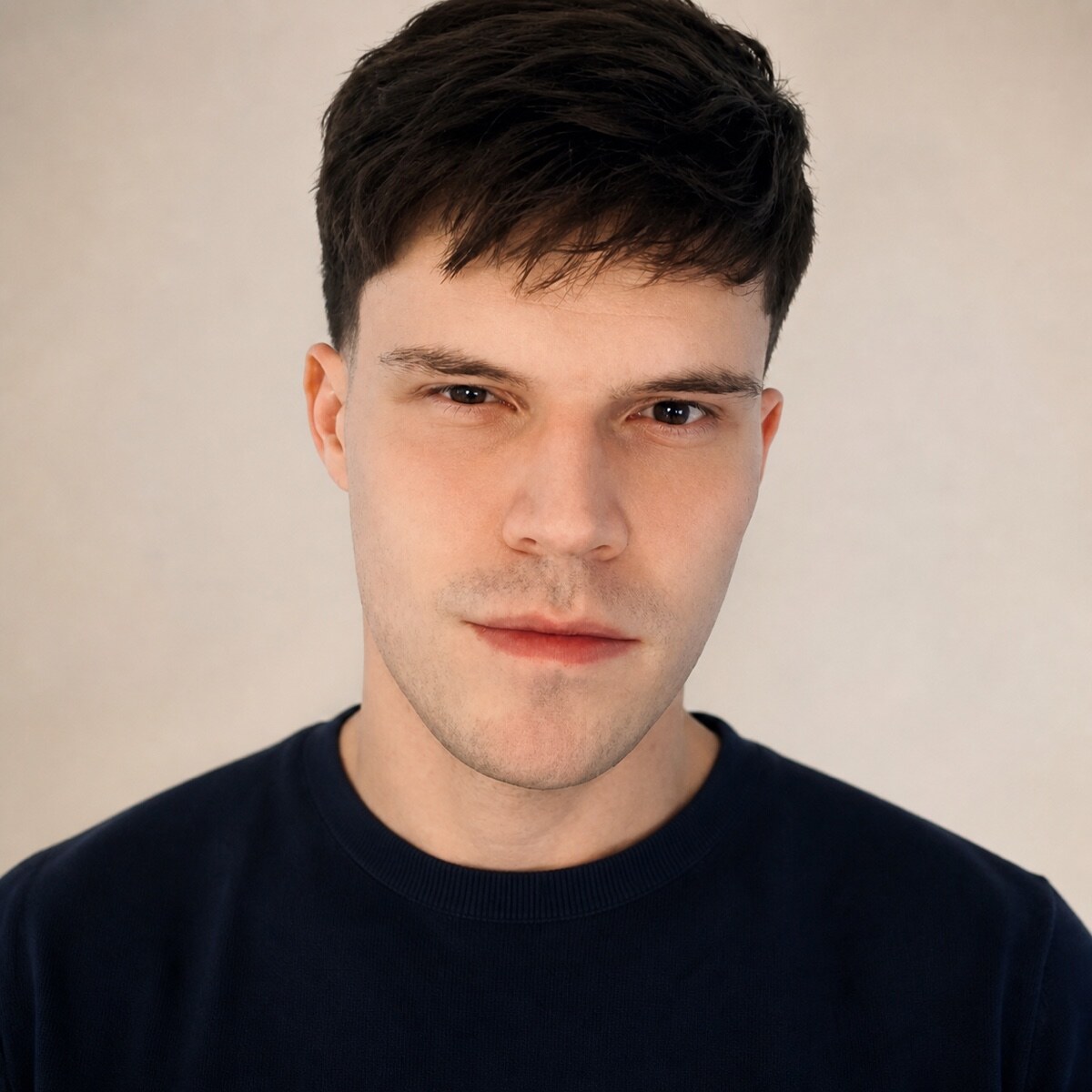
Britain’s data-protection regulator changed on 30 September 2026, in structure as well as in name. The Information Commissioner’s Office became the Information Commission’s Office. The single commissioner who had held all of its legal powers was replaced by a board with collective responsibility for decisions, the ICO announced that day. The board has seven non-executive directors, an interim chief executive and, for now, no permanent chair. This is a guide to who they are and what each brings.
Why there is a new board
For 42 years the regulator was a single office-holder. The Information Commissioner held every statutory power personally, an arrangement lawyers call a corporation sole. The Data (Use and Access) Act 2025 replaced that office with a body corporate, the Information Commission, governed by a chair, non-executive directors and a chief executive. The switch took effect on 30 September 2026. The organisation keeps the initials ICO, which now stand for the Information Commission’s Office, and on the same day it opened a headquarters on Oxford Road in Manchester. Our earlier article covers what the change means for organisations.
The plan had been for John Edwards, Information Commissioner since 2022, to chair the new board until his term ended in late 2026. He stepped back on 26 February 2026 while an independent workplace investigation examined his conduct, and resigned on 19 June. The ICO said the investigation found a case to answer and that his behaviour fell short of what is expected of a public official. Liz Kendall, then the technology secretary, said she had seen evidence of vulgar and highly sexualised language used with staff. Mr Edwards said he had made attempts at humour that were inappropriate, disagreed with how the investigation was run, and accepted that his position was untenable. No commissioner had resigned before.
Ms Kendall named the seven non-executives on 15 July, opened the search for a chair the same day, and said that “trust starts with culture”. A week earlier she had told MPs there would be an independent review of the ICO’s culture, accountability and governance. Days later Andy Burnham became prime minister, dismissed Ms Kendall and abolished her department. Sponsorship of the ICO has passed to the Department for Digital, Culture, Media and Sport under Lisa Nandy, City AM reported in September.
The board therefore starts work with three things unsettled: its chair, the review, and its relationship with a new sponsor.
The board at a glance
| Member | Board role | Background | Current outside roles |
|---|---|---|---|
| Maggie Carver | Deputy chair, acting as chair | Broadcasting and media boards; interim chair of Ofcom, 2021-22 | Pro-chancellor, University of Winchester; chair of two charities; deputy lieutenant of Hampshire |
| Laurie Benson | Non-executive | Media sales and publishing at Time and Bloomberg; Charity Commission board | None declared to the ICO |
| Stephen Cohen | Non-executive | Asset management, mostly Japanese equities; Gambling Commission | Chair, JPMorgan Japanese Investment Trust; Civil Service Commissioner; audit chair at ARIA |
| Sukhvinder Kaur-Stubbs | Non-executive | Charity chief executive; consumer representation in utilities | Regulator of Social Housing board; chair, Thames Water challenge group; RICS standards board |
| Gary Kildare | Non-executive | Three decades at IBM, latterly head of HR for Europe | Independent non-executive at Crowe; Legal Services Board |
| Hilary Newiss | Non-executive | Intellectual-property solicitor; science and health boards | Chair, British Science Association; Intellectual Property Office board; deputy chair, English National Opera |
| Scott McPherson | Non-executive | Civil servant for 25 years; director general in four departments | Chair, The Motor Ombudsman; advisory board, Leapwise |
| Paul Arnold | Interim chief executive | 25 years in data protection, 15 of them at the ICO | None found |
The non-executives were appointed for an initial three years at £25,000 a year. Outside roles are taken from the ICO’s register of interests, which each non-executive completed in September 2026. The table lists the main entries, not all of them.
Maggie Carver, deputy chair
The board’s first act on 30 September was to make Ms Carver deputy chair. She will carry out the chair’s duties until a permanent appointment is made, which the ICO expects in spring 2027.
She has done this job before at a larger regulator. Ms Carver joined the board of Ofcom, the communications regulator, as deputy chair in September 2018. When Lord Burns left at the end of 2020 the government made her interim chair for what was announced as six months. The search for a successor ran on, and she stayed in the role until April 2022. During that period Ofcom was preparing to take on the regulation of online harms. She left Ofcom in January 2024, having also chaired its content board.
Her earlier career was in investment banking and then television. She helped set up Meridian Broadcasting, an ITV franchise, and ran ThreeonFour, which produced Channel 4’s racing coverage. She has chaired ITN, the multiplex operator SDN, the British Board of Film Classification and the Racecourse Association, and sat on the boards of Channel 5, RDF Media and British Waterways. Until 2017 she and her husband owned a retailer of goods for elderly and disabled people. The ICO’s biography counts more than 22 boards in all.
Her declared interests are now mostly charitable and civic: pro-chancellor of the University of Winchester, chair of the Licoricia of Winchester Appeal and of a charity called Preventing Prejudice, and a deputy lieutenant of Hampshire.
The other six non-executives
Laurie Benson
Ms Benson spent her executive career selling advertising and running the commercial side of media companies. In America she worked for cable networks, helped launch Home & Garden Television at Scripps Howard and was senior vice-president of sales at Oxygen Media. She joined Time magazine’s London office in 2005 as publishing director for Europe, the Middle East and Africa, and later ran Bloomberg Media in the same region.
Since then she has collected board seats in both sectors. She sat on the board of the Charity Commission from 2016 to 2019, served on the Intellectual Property Office’s steering board, and is a trustee of the Royal Air Force Museum. In the private sector she chaired the audit committee of Christie Group, an AIM-listed services firm, and the remuneration committee at Grant Thornton, an accountancy firm, as an independent non-executive. She declared no outside interests to the ICO in September.
Stephen Cohen
Mr Cohen is the board’s financier. He read physiology at Oxford and then spent 35 years in asset management, 20 of them at Mercury Asset Management. He lived in Japan for seven years, set up two businesses there and managed Japanese equity portfolios for a decade. His last executive job, from 2011 to 2013, was running an activist fund in Japanese shares at Governance for Owners.
He has more regulatory board experience than his biography on the ICO site suggests. He was a commissioner at the Gambling Commission from 2016 to November 2024, where he chaired the committee overseeing the competition for the fourth National Lottery licence. He has chaired the Health and Care Professions Council, which regulates some 370,000 health workers, and has been a Civil Service Commissioner since 2022. He chairs the JPMorgan Japanese Investment Trust and the audit committees of the Advanced Research and Invention Agency and a Schroders investment trust, and sits on the council of Research England, according to UKRI and his ICO declaration.
Sukhvinder Kaur-Stubbs
Ms Kaur-Stubbs has spent much of her career representing consumers to monopolies and their regulators. She was chief executive of the Runnymede Trust and the Barrow Cadbury Trust, two charities concerned with equality and social inclusion, for 12 years in total. She sat on the boards of EnergyWatch and Consumer Focus, the statutory consumer bodies, and served two terms on the board of Severn Trent Water.
Since July 2021 she has chaired the independent group that scrutinises Thames Water on behalf of its 15m customers. She joined the board of the Regulator of Social Housing the same year to oversee new consumer standards. She also sits on the standards and regulation board of the Royal Institution of Chartered Surveyors and on the board of the Old Trafford regeneration corporation in Greater Manchester. Earlier she chaired the regeneration committee of the London Legacy Development Corporation and has chaired NHS trusts, according to her Thames Water biography.
Gary Kildare
Mr Kildare worked at IBM for more than 30 years and finished as chief human-resources officer for Europe and global head of labour relations. His biography at Crowe says he also led IBM’s global investigations function and chaired its disciplinary action review committee. That experience bears directly on the task Ms Kendall set the board in July, which was to rebuild the organisation’s culture.
He has been an independent non-executive at Crowe, an audit and advisory firm, since 2023, and sits on its public interest committee. He is a lay member of the Legal Services Board, which oversees the regulators of lawyers in England and Wales, and was reappointed for four years from April 2025. Past roles include non-executive posts at HM Revenue & Customs and Education Scotland. He is a member of the court of Heriot-Watt University.
Hilary Newiss
Ms Newiss is the board’s lawyer. She qualified as a solicitor in 1981 and became head of intellectual property at Denton Hall, now Dentons, where her work covered patents and data in the life sciences. She retired from full-time practice in 2000.
Her public appointments since have clustered around science, health and the ethics of using personal information. She sat on the Human Genetics Commission and on the National Information Governance Board for Health and Social Care, which advised on the handling of patient data. She was a trustee of the Francis Crick Institute and the Natural History Museum and chaired National Voices, a coalition of 160 health and care charities. She now chairs the British Science Association and sits on the boards of the Intellectual Property Office, the Cell and Gene Therapy Catapult and the Rosalind Franklin Institute. She is deputy chair of English National Opera. Her declaration notes that her husband chairs the Royal College of Art and is a non-executive at the Department for Education.
Scott McPherson
Mr McPherson is the former official on the board. He studied philosophy, politics and economics at Oxford, took an MBA at London Business School and spent more than 25 years in the civil service. His most senior posts were director general for crime, policing and fire at the Home Office from 2017 to 2020, director general of the community testing programme at the Department of Health and Social Care during the pandemic, and director general for strategy, policy and programmes at the UK Health Security Agency until December 2024.
Before that he was director of law, rights and international at the Ministry of Justice, managed a portfolio of projects valued at £100bn at the Department of Energy and Climate Change, and headed the home-affairs team in the Cabinet Secretariat. Policing and health are two of the sectors that handle the most sensitive personal data, and he has run policy in both. He now chairs The Motor Ombudsman and advises Leapwise, a consultancy to police forces, according to his ICO declaration.
Paul Arnold, interim chief executive
Mr Arnold is the only board member who has made a career in data protection. He has worked in the field for more than 25 years and had been at the ICO for 15 of them when he was named the commission’s first chief executive in 2025. He was previously deputy chief executive and chief operating officer. He was appointed MBE in 2024 for services to regulation and to equality, diversity and inclusion. His official biography says his outlook was shaped by growing up in a small family business and by being severely visually impaired.
His appointment is interim and capped at two years, because a permanent chief executive can be chosen only once the board is in place. The ICO has said a permanent recruitment will follow.
Mr Arnold has in effect run the regulator since February. The government designated him acting accounting officer on 8 June, and from 10 June he held the commissioner’s non-delegable legal responsibilities, the ICO’s annual report for 2025-26 records. An ICO spokesperson told City AM in July that concerns about the former commissioner had been raised and acted on within the limits of the old structure.
The vacant chair
The advertisement for the chair offers £120,000 a year for three days a week and a four-year term. That is the sum Ms Carver was paid as interim chair of Ofcom in 2021. Applications closed on 19 August 2026 and interviews are due to finish by 6 November. The appointment is made by the Crown on a minister’s recommendation, and the preferred candidate must appear before a parliamentary select committee first.
The selection panel has three members: Emily Middleton, a director general in the civil service; Dame Colette Bowe, who chaired Ofcom from 2009 to 2014; and Graeme Reid, professor of science and research policy at University College London. The essential criteria ask for board leadership and the ability to scrutinise an organisation. Experience of regulation in the commission’s field is listed only as desirable.
The advertisement was published by the Department for Science, Innovation and Technology, which was abolished in July. The process has continued under the Department for Digital, Culture, Media and Sport, and the ICO expects it to conclude in spring 2027.
What the line-up shows
The board is strong on governance and on experience of other regulators. Five of the seven non-executives have sat on the board of a regulator: Ofcom, the Gambling Commission, the Charity Commission, the Regulator of Social Housing and the Legal Services Board among them. Ms Carver has led a regulator’s board through a long vacancy in the chair. Mr Kildare has run investigations and disciplinary processes at a large employer. Mr McPherson knows how Whitehall deals with its arm’s-length bodies.
Four of the seven non-executives are women. Ms Kendall had told MPs on 8 July that the board would have a female majority among its non-executives, City AM reported.
Subject expertise is thinner. Ms Newiss has practised data law and advised on the governance of patient records. None of the other non-executives has a published background in privacy regulation, information security or freedom of information, which the ICO also oversees. None lists experience as an engineer or product leader at a technology company. Mr Arnold is the board’s data-protection specialist, and he is the executive the non-executives are there to scrutinise.
That matters because the criticism of the ICO before the scandal concerned enforcement, and the appointments were framed around culture. City AM reported in July 2026 that the regulator issued two fines under the GDPR in 2023-24, worth £3.8m together, in a year when it received tens of thousands of complaints. David Erdos, a law professor at the University of Cambridge, told the paper that the ICO’s problems predated Mr Edwards and amounted to under-enforcement. Joanna Ludlam of Jenner & Block, a law firm, said the new board would restore credibility only if it brought regulatory and technological expertise. Mr Edwards had defended a selective approach, arguing that the ICO could not investigate every complaint.
The review of the ICO’s culture is also contested. The ICO has said it will commission the review jointly with the government. PCS, a civil-service union, argues that this leaves the ICO too close to an inquiry into its own leadership, and wants ministers and Parliament to oversee it instead.
Three decisions will show how the board intends to work. The first is the scope and independence of the culture review. The second is the corporate strategy the ICO is preparing, which it says will cover artificial intelligence, cyber resilience, children’s privacy and public services. The third is the choice of a permanent chief executive, which is due before Mr Arnold’s two-year term runs out in 2027.
Sources
- ICO: The Information Commission board
- ICO: ICO welcomes transition to new Information Commission and marks new chapter with Manchester head office opening (30 September 2026)
- ICO: Register of interests, including each non-executive’s declaration (September 2026)
- ICO: ICO confirms John Edwards resignation (19 June 2026)
- ICO: Information Commissioner’s annual report 2025-26, introduction
- GOV.UK: Seven non-executive members appointed to Information Commission Board as chair recruitment launches (15 July 2026)
- GOV.UK public appointments: Information Commission Chair
- GOV.UK: Maggie Carver CBE appointed as Interim Chair of Ofcom (January 2021)
- Local Government Lawyer: ICO formally becomes the Information Commission as new board takes charge (30 September 2026)
- City AM: Pressure grows for wider data watchdog overhaul (9 July 2026)
- City AM: Government admits Burnham’s Whitehall shake-up leaves tech policy in limbo (September 2026)
- Silicon UK: UK Information Commissioner resigns after workplace probe (June 2026)
- PCS: campaign page on the ICO review
- Member biographies: UKRI, Gambling Commission, Thames Water, Crowe, Francis Crick Institute, Cambridge CSaP, Press Gazette


